
ISI Academy - Measuring Wealth in Household Surveys in Low- And Middle-Income Countries
| Datum | 11 Jun 2026 |
| Tijd | 14:00 CEST - 15:30 CEST |
| Level of instruction | |
| Instructor |
Irene Toma
Federico Polidoro
Petrus Stephanus
Hugues K. Kouadio
|
| Registration fee | |
View the slides:
Abstract:
Wealth is a key component of household economic well-being, alongside income and consumption. Yet in Low- and Middle-Income Countries (LMICs), systematic data collection on household wealth remains limited, partial, and poorly harmonized. This webinar presents new Guidelines on Measuring Wealth in Household Surveys in Low- and Middle-Income Countries, developed by the World Bank, the Bank of Italy, and the Luxembourg Income Study, under the aegis of the Inter-Secretariat Working Group on Household Surveys.
---
- The New Global Standard: Be among the first to learn about the new unified guidelines co-developed by three global authorities: the World Bank, the Bank of Italy, and the Luxembourg Income Study.
- Real-World Country Case Study: Gain immediate practical insights from the Namibia Statistics Agency (NSA) on how these guidelines are actively applied on the ground.
- Tailored for Informal Economies: Unlike traditional frameworks, this provides a flexible approach explicitly designed for LMIC specificities, such as informal ownership, gender wealth gaps, and vulnerability to shocks.
Instructors

About the instructor
Irene Toma is a development economist who works as a consultant for the World Bank, as well as other international organizations and research institutions, with experience both at field and headquarters levels. In recent years, she has worked on different projects, focusing on wealth, gender, agriculture, and food security. She is a co-author of the World Bank’s Guidelines for Measuring Wealth in Household Surveys in Low- and Middle-Income Countries, published under the aegis of the Inter-Secretariat Working Group on Household Surveys. She holds a bachelor’s degree and a master’s degree in development economics from the University of Florence.
About the instructor
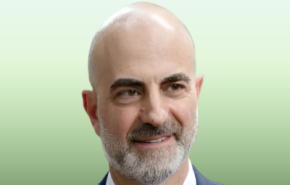
Federico Polidoro is the Program Manager of the Center for Development Data, a hub dedicated to fostering methodological innovation and strengthening countries’ capacity in household surveys. He joined the World Bank (2023), after a long experience in the Italian national statistical Institute (2012-2016), where he was the head of Consumer Price Division and since April 2016 the head of the Division Integrated System on economic conditions and consumer prices. Division in charge to conduct Consumer price, purchasing power parity and house price surveys, EUSILC and HBS, some hard-to-reach population surveys and to estimate absolute/relative poverty indicators. His research concerns the aforementioned areas.

About the instructor
Petrus Stephanus is a Statistician with over 10 years of experience in statistical research, survey implementation, data analysis, and project management. He currently serves as a Regional Statistician at the Namibia Statistics Agency, where he coordinates and oversees national censuses and surveys at regional level. Most recently, he served as a Regional Supervisor for the Namibia Household Income and Expenditure Survey (NHIES), overseeing field operations for ensuring the successful of the survey. Petrus holds a Bachelor of Science Honours Degree in Applied Statistics from the Polytechnic of Namibia and is currently pursuing a Master of Science in Applied Statistics at the Namibia University of Science and Technology.
About the instructor
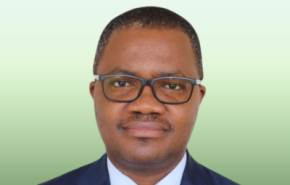
Hugues K. Kouadio is a statistician, economist, and Director General of ENSEA. He coordinates the African Center of Excellence in Statistical Training and presides over AGROST. A member of several scientific councils, his research centers on economic policy evaluation, focusing on local, agricultural, and informal economics, inequalities, and the labor market. He holds a Doctorate in Economics and a Diploma of Advanced Studies from the University of Paris 1 Panthéon Sorbonne, an Engineer Statistician Economist diploma from ENSEA, and advanced management certifications from MDE Business School and ENAP Quebec.