
ISI Academy - Quantifying Corruption for People and Businesses
| Datum | 26 Feb 2026 |
| Tijd | 14:00 CET - 15:30 CET |
| Level of instruction | |
| Instructor |
Salomé Flores Sierra Franzoni
Roberto Kukutschka
|
| Registration fee | |
Abstract:
Advancing country-level corruption measurement requires moving from fragmented, perception-heavy data to coordinated, high-quality, multi-source statistical systems that are embedded in national institutions and used for real policy decisions. This webinar examines how countries are putting the UNODC Statistical Framework to measure corruption into practice, using it to build coordinated national data ecosystems and robust information systems that go beyond perception-based indicators to produce direct, indirect, and contextual measures for evidence-based anti-corruption policies. National ownership of standardised corruption statistics is extremely valuable for strengthening public trust, attracting investment, tracking progress on Sustainable Development Goal 16, and turning measurement into concrete anti-corruption action.
International efforts to make corruption measurable
Salome Flores
Abstract: Building smarter, better-coordinated data ecosystems requires a comprehensive foundation for measuring corruption. These ecosystems must be robust enough to produce actionable evidence that informs, monitors, and assesses anti-corruption efforts. The UNODC statistical framework for measuring corruption provides harmonised concepts and methodologies to institutionalize corruption statistics. This framework advocates for a coordinated approach among relevant stakeholders, ensuring that data is systematically collected, analysed, and disseminated to monitor policies and report progress.
Instructors
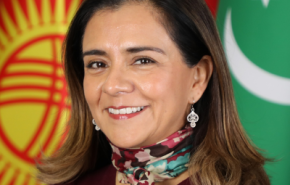
About the instructor
Salomé Flores Sierra Franzoni is the Head of the UNODC Information Centre for researching and analyzing transnational threats based in Tashkent, Uzbekistan. Before that, she was the Coordinator of the Center of Excellence UNODC-INEGI, supporting 28 countries in Latin America and the Caribbean in adopting international standards to improve the quality and availability of crime and drug statistics for evidence-based decision making and SDG reporting. She has also supported the development of methodological guidelines such as the Manual to measure corruption through surveys, the UNODC Statistical Framework to measure corruption and the four UNODC guidelines on the governance and production of statistical data by criminal justice institutions.

About the instructor
Roberto Martínez B. Kukutschka is Research Coordinator at Transparency International and a PhD candidate at the Hertie School of Governance in Berlin, where he also obtained a Master’s in Public Policy.
Before joining TI, he worked as a Research Associate for the European Research Centre for Anti-Corruption and State-Building and conducted research for the large-scale EU-funded Projects ANTICORRP and DIGIWHIST. His main research interests include corruption measurement and crony capitalism. Besides his experience in the NGO and academic sectors, Roberto has also experience in the public sector. Before moving to Germany, he served as Head of the Anti-Corruption Department at the Mexican Tax Administration Service, where he was responsible of overseeing the enforcement and implementation of the OECD’s anti-bribery convention and the UNCAC.