
The International Statistical Institute (ISI) is delighted to welcome the second group of Elected Members for 2026.
Election as an ISI Elected Member is an international recognition of outstanding professional achievements and contributions to the statistical sciences. Our new members join a global community dedicated to advancing statistics and data science for the benefit of society through collaboration, innovation, and excellence.
We are pleased to introduce our newly elected members and warmly welcome them to the ISI community.
2026 – 2nd Round Newly Elected Members
Australia
- Olivier, Jake
- Tanaka, Emi
- Warton, David
Costa Rica
- Chou Chen, Shu
Hungary
- Kovács, Péter
India
- Mukherjee, Diganta
Italy
- Lepore, Antonio
Saudi Arabia
- Addulah, Sameh
Senegal
- Lo, Serigne Ndame
Taiwan
- Chang, Ming
- Lin, Sheng-Hsuan
- Wu, Wei-Ying
UK
- Humpherson, Edward
US
- Boone, Edward
- Connolly, Michele
- Ye, Shen
Meet Some of Our New Members
Below, you can learn more about several of our newly elected members and the diverse expertise and experiences they bring to the ISI community.
Emi Tanaka
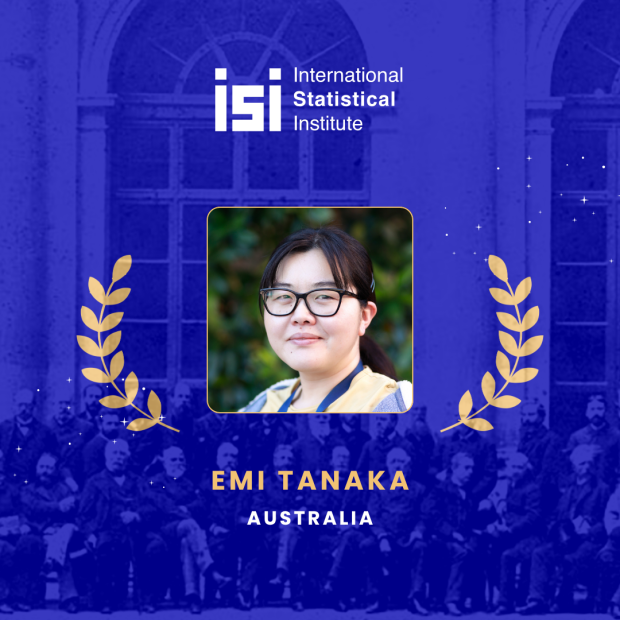
Emi Tanaka is an academic statistician at the Australian National University (ANU) with a passion for data science and open-source software development. She currently serves as Editor-in-Chief of the R Journal and leads the Analytics for the Australian Grains Industry project at ANU. Her research focuses on developing practical statistical methods, software, and data-driven solutions with applications spanning agriculture, bioinformatics and experimental design.
Ming-Chung Chang
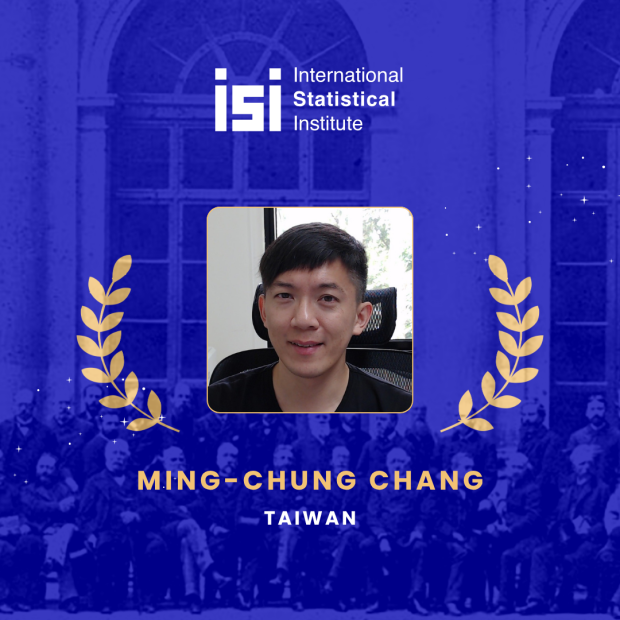
Ming-Chung Chang is an Associate Research Fellow at the Institute of Statistical Science, Academia Sinica, Taiwan. He received his Ph.D. in Statistics from National Tsing Hua University in 2015 and was a visiting scholar at the Georgia Institute of Technology under the mentorship of C. F. Jeff Wu. He subsequently completed postdoctoral training at Academia Sinica under the supervision of Ching-Shui Cheng. His research interests include multi-stratum factorial designs and subsampling methods. He has published in leading statistical journals, including The Annals of Statistics, Journal of the Royal Statistical Society: Series B, Journal of Computational and Graphical Statistics, and Statistica Sinica. His recent work focuses on developing statistical methodology for complex experimental systems, large-scale data analysis, and hyperparameter optimization.
Péter Kovács
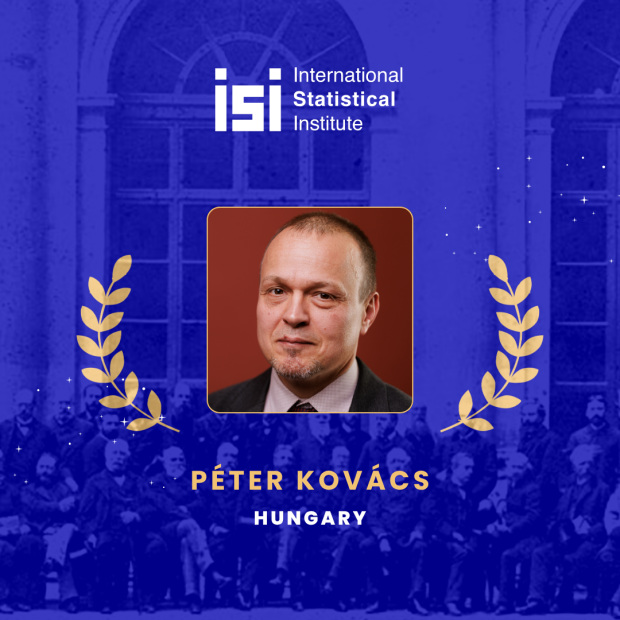
Péter Kovács is a Hungarian statistician and associate professor with more than 20 years of experience in higher education. He is Head of the Institute of Financial and Economic Analysis and has chaired the Department of Statistics and Demography since 2013. He previously served as Vice Dean from 2014 to 2017 and as Dean from 2017 to 2024. He holds a degree in Mathematics, as well as a PhD and habilitation in Economics, and has successfully supervised 13 PhD students. His research focuses on statistical and financial literacy, statistics education, multivariate statistical modelling, and the use of digital tools and generative AI in higher education. He has extensive international research and teaching experience, has contributed to initiatives such as the ProCivicStat project, and serves as an ISLP Country Coordinator.
Antonio Lepore

Antonio Lepore is an Associate Professor of Statistics for Experimental and Technological Research at the University of Naples Federico II in the Department of Industrial Engineering, where he also serves as a program committee member and quality evaluation representative for the PhD Program in Industrial Engineering. His main research interests and international journal publications focus on statistical methods for analyzing and monitoring high-dimensional data, with applications in engineering and environmental sciences. He is a member of the Italian Statistical Society (SIS) and the Institute for Operations Research and the Management Sciences (INFORMS). He is currently a council member of the European Network for Business and Industrial Statistics (ENBIS) and serves as a liaison between ENBIS and the International Society for Business and Industrial Statistics (ISBIS). He currently serves as an Associate Editor of Technometrics, the INFORMS Journal on Data Science and Statistical Methods & Applications (Applications).
Shu Wei Chou Chen
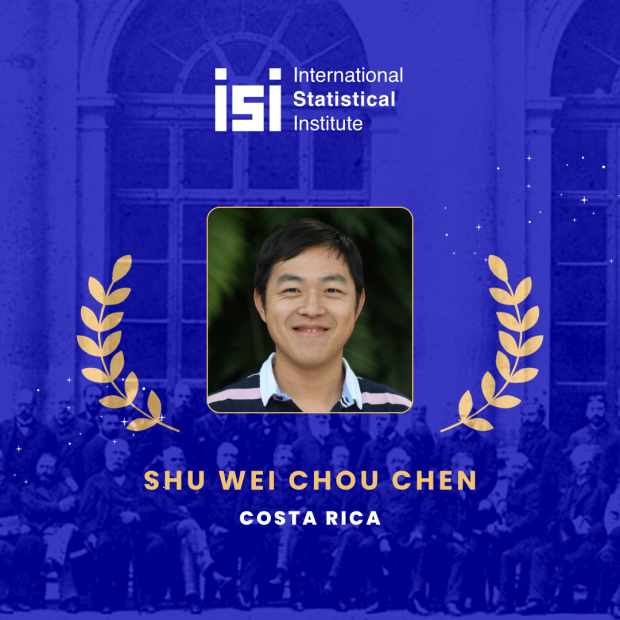
Shu Wei Chou Chen is a Professor at the School of Statistics, University of Costa Rica (UCR), where he serves as Director of the Master’s Program in Statistics. His research focuses on the development of statistical methods for dependent and nonstationary data, particularly in time series and spatio-temporal processes, with applications in environmental science, public health, and economics. He is an active researcher at the Research Center in Pure and Applied Mathematics (CIMPA) and collaborates with multiple research centers at UCR, including the Geophysical Research Center (CIGEFI), the Central American Population Research Center (CCP), and the Institute of Social Research (IIS). His work is characterized by interdisciplinary collaboration and a commitment to advancing applied statistical research.
Sameh Abdulah
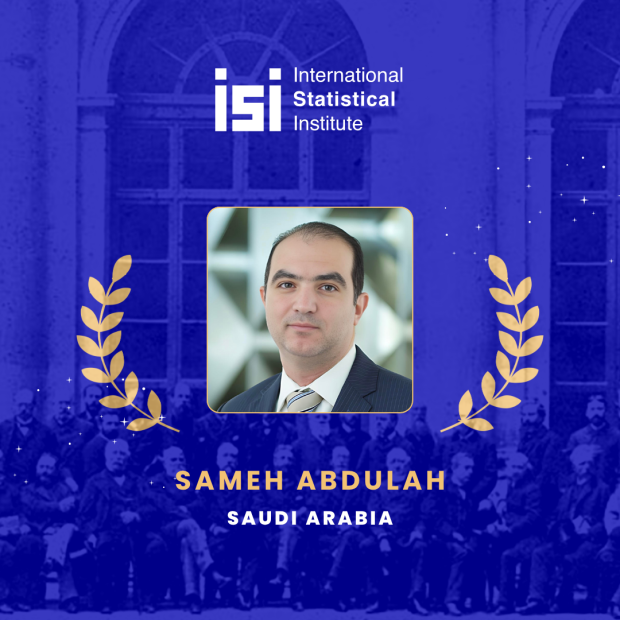
Dr. Sameh Abdulah is a Senior Research Scientist at King Abdullah University of Science and Technology (KAUST), Saudi Arabia, working at the intersection of high-performance computing (HPC), statistical computing, artificial intelligence, and large-scale environmental data science. He received his Ph.D. in Computer Science and Engineering from The Ohio State University and has developed scalable methods and software for geospatial statistics, Gaussian process modeling, mixed-precision computing, and climate applications. His work has appeared in leading HPC/statistics journals and conferences, and he is a 2024 ACM Gordon Bell Prize winner in the Climate Track and a 2022 ACM Gordon Bell Prize finalist. He has contributed to major scalable statistical software efforts and has delivered invited courses and talks on large-scale spatial data science. He is also a Senior Member of IEEE.
Serigne Lo
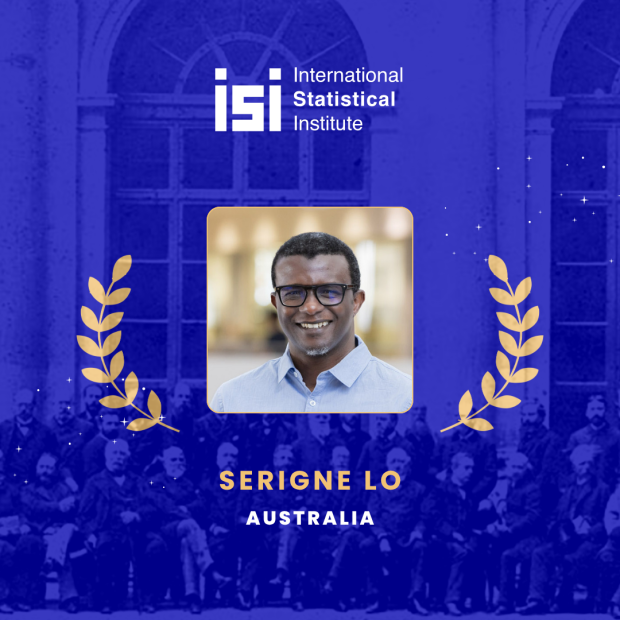
Serigne Lo is Professor of Biostatistics at the University of Sydney and Head of Biostatistics at Melanoma Institute Australia, the world's largest melanoma research and treatment centre. His work spans clinical trial methodology, risk prediction, survival analysis, and precision oncology. He has led the statistical design and analysis of practice-changing melanoma trials and developed prediction tools now embedded in international clinical guidelines. Professor Lo has authored more than 300 peer-reviewed publications, secured over AUD $62 million in competitive research funding, and supervised more than 50 postgraduate and honours students. He serves on the American Joint Committee on Cancer (AJCC) Melanoma Disease Site Panel, contributing to Version 9 of the AJCC Cancer Staging System. His research is united by a single aim: translating advanced statistical methods into tools that improve patient outcomes and inform clinical decision-making worldwide.