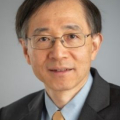
For those attending the ISI World Statistics Congress and for members and colleagues who could not join us in person, we are pleased to share the speech delivered by ISI President Xuming He during the Opening Ceremony.
In his address, he reflects on the importance of collaboration, innovation, and the global statistical community that unites us all. Read the full speech below.
_____________________________________________________________________________________________________________
Distinguished delegates, colleagues, and friends,
It is a great honor to welcome you all to The Hague for the 65th World Statistics Congress of the ISI.
As Oliver mentioned, The Hague holds a special place in our history. It hosted the 13th ISI Session in 1931, during which the ISI made the pivotal decision to establish its Permanent Office here. Just a 25-minute walk from the World Forum is the Peace Palace, home to several international institutions, including the UN International Court of Justice—and the temporary home of the ISI Permanent Office during World War II.
Since the ISI Permanent Office was established in The Hague, the world has faced many profound challenges—wars, pandemics, and political unrest. Yet, statisticians worldwide have remained resilient and committed to our shared mission. We understand that statistical work is critical in nearly every aspect of life—from agriculture to business, from social justice to public health.
The ISI has consistently taken a leading role in upholding professional ethics and uniting the global statistical community to support and strengthen each other’s work.
Statisticians are sometimes seen as working in “low-risk” professions. But that doesn’t mean we are immune from external pressures. Nearly ten years ago, Andreas Georgiou, then-President of the Greek national statistical office, faced multiple criminal and civil legal cases—one of which remains unresolved. In 2022, Sait Erdal Dinçer was dismissed as head of the Turkish Statistical Institute after publishing inflation data showing a 19-year high. And earlier this year, Erika McEntarfer was removed as Commissioner of the U.S. Bureau of Labor Statistics.
These incidents raise serious concerns about political interference in the core principles of our profession. In each case, the ISI took a public stand, reaffirming that the UN Fundamental Principles of Official Statisticsand the ISI’s Declaration on Professional Ethics are vital for ensuring transparency, credibility, and public trust in statistical systems. We remain steadfast in defending these principles.
Our field is growing rapidly, driven by big data and new computing technologies, with statisticians and data scientists in high demand across public and private sectors. However, we face multiple challenges.
We must move quickly to keep pace with the data revolution. Many university statistics curricula were designed decades ago, and we need more resources to modernize them. There's also a significant—and potentially widening—gap in statistical research and education between developed and developing countries. Furthermore, it is clear that we must better engage with society and further amplify our professional voice, and most of us are not trained to do that. As AI and big data become increasingly influential, our voices must be louder and more visible.
How should the ISI respond to these challenges?
First, the ISI itself must adapt to changes in the regulatory, geopolitical, and technological landscapes. Over the past year, we undertook a necessary revision of our Statutes and By-Laws to align with current Dutch law and to better utilize digital tools for communication and voting. These updates are foundational to ensuring the ISI operates effectively and efficiently for the long term.
Our greatest asset is our diverse, global community—members from over 150 countries and regions, each bringing unique expertise. This gives us an exceptional opportunity to lead in statistical capacity development. Our newest initiative is the ISI Academy, established in 2023. Its goal is to provide sustainable solutions for regional and international capacity building. In the past year, we have moved from planning to action. I encourage all of you to stay engaged so the ISI Academy can thrive and grow in the coming year.
Of course, success in our capacity-building efforts will rely on collective wisdom and support. Today, I’m delighted to announce a new initiative: the creation of the Godambe Prize, led by the ISI.
Vidyadhar P. Godambe, born in India on 1 June 1926, earned his PhD from the University of London and held academic positions in India, the U.S., and Canada. In 1991, he was named Distinguished Professor Emeritus at the University of Waterloo. This prize—funded by his estate—honors his legacy and will recognize outstanding contributions to statistical capacity development, with a focus on both foundational and applied work at regional and global levels. More information on the nomination and selection process will be forthcoming.
We are all gathered here for the scientific program of this congress. Our speakers and presenters will share cutting-edge research across a wide range of topics—from theoretical probability and statistical computing to educational innovation and real-world applications in banking, public health, and official statistics.
Many questions remain to be answered—and our expertise is more vital than ever as we strive toward better data, better AI, and ultimately, a better world. I believe that this Congress is another milestone on that journey.
I am especially pleased to confirm that our ISI President’s Invited Speaker, Professor Bhramar Mukherjee, will be joining us to share her experience and perspectives on how ISI is ready to advance statistical work in the era of big data and AI. I look forward to seeing you all at her keynote on Wednesday morning.
Each WSC is the product of incredible dedication and hard work. I sincerely thank the Scientific Program Committee, the National Advisory Committee, especially Statistics Netherlands, the Short Course Committee, the ISI staff, and many others who have contributed over the past two years. I also extend my deep appreciation to our sponsors and co-sponsors for their invaluable support.
We also look forward to an important global celebration: World Statistics Day 2025, which is just about two weeks away. Let’s make this Congress an integral part of that observance, and together, let’s celebrate the power and promise of statistics.
And now, with great pleasure and honor, let me introduce our special guest speaker, Angelique Berg, Director General of Statistics Netherlands (CBS), who will share her thoughts on hosting this Congress and our shared journey in advancing statistics globally.
Angelique Berg studied Public Administration and Finance at the Erasmus University in Rotterdam. Since September 2020, Angelique Berg has led Statistics Netherlands, building on an impressive career within the Dutch government. She previously served as Director General for Public Health at the Ministry of Health, Welfare and Sport, and as Director General for Fiscal Affairs at the Ministry of Finance. She also held senior positions at the Ministry of Housing, Spatial Planning and the Environment, the Inspectorate of the Budget, and the Office of the Prime Minister. With her extensive leadership experience and passion for data and policy, she works to strengthen CBS as a trusted source of statistics for government and society. Angelique actively participates in meetings of international organisations (EU, UN and OECD) and is Chair of the UNECE High Level Group on Modernisation of Official Statistics and vice-chair of the bureau of the OECD- Committee on Statistics and Statistical Policy (CSSP).
Please join me to welcome Angelique Berg to the podium.