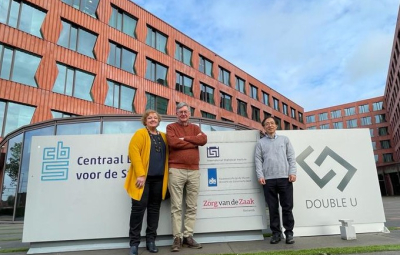
We are just over two months post WSC 2025 in The Hague, and the experience remains fresh in our minds. It was wonderful to meet members and friends of the International Statistical Institute and all its associations—people who had traveled from far and near to attend the World Statistics Congress this past October. It was equally inspiring to see the enthusiasm among so many for promoting the global enhancement of statistics and data science across academia, business, and government.
In his first blog, ISI President Fabrizio Ruggeri highlighted capacity development as a strategic priority, emphasizing the roles of the ISI Academy and the International Statistical Literacy Project. I share this long-term, deep passion for capacity development—and I also have a strong commitment to broadening our ISI family by welcoming more individual members, including young statisticians, and more institutional members from around the world. I feel very honored to be serving as the President-elect of ISI, and in this post, I would like to share my thoughts on globally active and inclusive capacity development.
The ISI Academy is becoming increasingly active as a platform for capacity development. The ISI Executive Committee oversees the capacity development delivery strategically, while the day-to-day operations and decisions are handled by the ISI Academy Management Team. They will seek input as needed from the ISI Capacity Development Committee and the presidents of all seven ISI associations—Bernoulli, IASC, IASE, IAOS, IASS, ISBIS, and TIES. Task Teams will carry out the various tasks for realizing proposed action items and implementing the Academy’s initiatives. The Management Team will oversee their work and help to stimulate various collaborations when necessary. This structure will ensure that our efforts are coordinated, impactful, and inclusive.
Training opportunities will include in-person and online courses, workshops, webinars, and mentoring programs. For example, Courses can range from full-length offerings to micro-courses or specialized sessions on statistical software. The overarching goal is to enhance skill development and empower participants to achieve success in their professional environments. Closely aligned with training is our focus on Building Global Collaborations—strengthening ties between statistical communities in academia, government, industry, and with NGO’s and other international organisations that work in the field of capacity development (for example, World Bank, IMF, OECD, etc.) Another critical element is quality assessment, ensuring that all ongoing capacity development efforts are effective and relevant. Different Task Teams will contribute to content development, course selection, and other operational aspects of the ISI Academy. Meanwhile, the ISLP will continue to promote statistical literacy across the world, among young people and adults, in all walks of life.
Capacity Development is a collaborative effort. On behalf of ISI, I am deeply grateful to everyone who participates in these capacity development activities, especially the volunteers who dedicate their time and expertise.
I warmly encourage all ISI members and friends to get involved: volunteer, become members of ISI and at least one of its associations, and contribute to our shared mission. Together, we can continue to advance the global development of statistics and data science, making a lasting difference for everyone.