
Professor Arellano-Valle wins the 2019 ISI Mahalanobis International Award
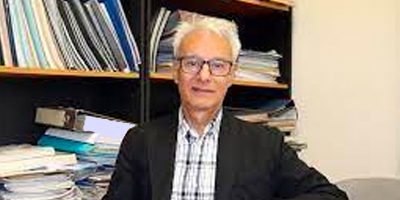
Professor Arellano-Valle wins the 2019 ISI Mahalanobis International Award
Professor Arellano-Valle, Department of Statistics, Pontificia Universidad Católica de Chile, has made outstanding contributions to Statistics in a developing country and region, as an academic leader, in professional leadership and as an inspiration and capacity-builder. His lifetime achievements in statistics (especially in developing countries), and promotion of best statistical practices truly reflect the spirit of the work of Professor P.C. Mahalanobis.
Professor Arellano-Valle is a long-time academic leader in Statistics in Chile and in South America. His contributions have been immense and diverse, especially so in multivariate analysis, skewed models, multivariate modelling, measurement error models, ordered data analysis, and statistical inference based in flexible models. His work in multivariate statistics, notably as a global leader in elliptically contoured distributions and skew-elliptical distributions, is particularly apt in memory of Professor P.C. Mahalanobis who made so many seminal contributions to multivariate statistics. In addition, in his advancement of research, Professor Arellano-Valle has systematically pursued collaboration, always involving others, very often junior people, offering guidance, ideas and encouragement. This style of work is reflected in the vast number of co-authors of his many papers, many being former students of his.
Professor Arellano-Valle is an inspiration and capacity-builder in Statistics. He is a very sought-after advisor and has trained and inspired a large number of students of different nationalities, both at the M.S. and Ph.D. levels, who have taken jobs in academia, government, and in industry. He is also well known for his inspiring teaching at all levels. He is regarded as the mentor and the cultural leader by many statisticians in a considerable portion of South America, especially but not only of the younger generations. Moreover, his ties with scientists from Europe, North America and, more recently, Central Asia have provided links with other environments, facilitating the interaction between South America and the world.